
The Author Who Used AI to Write 200+ Books Under 21 Pen Names
One romance author used AI to write more than 200 books in eight months and made six figures doing it. The internet was horrified. But the real shock isn't that she did it; it's that there was so little stopping her.
A few months ago I stumbled across a New York Times article that I haven't quite been able to shake - Can AI Chatbots Write Emotionally Rich Romance Books? (Now titled ‘The New Fabio is Claude’).
The title does exactly what it's supposed to do: provoke. Because obviously that must be rhetorical, right? Yet, it became hauntingly obvious in at least one sentence that actually reality didn’t seem to share this, and the question of AI grabbing hold of something human.
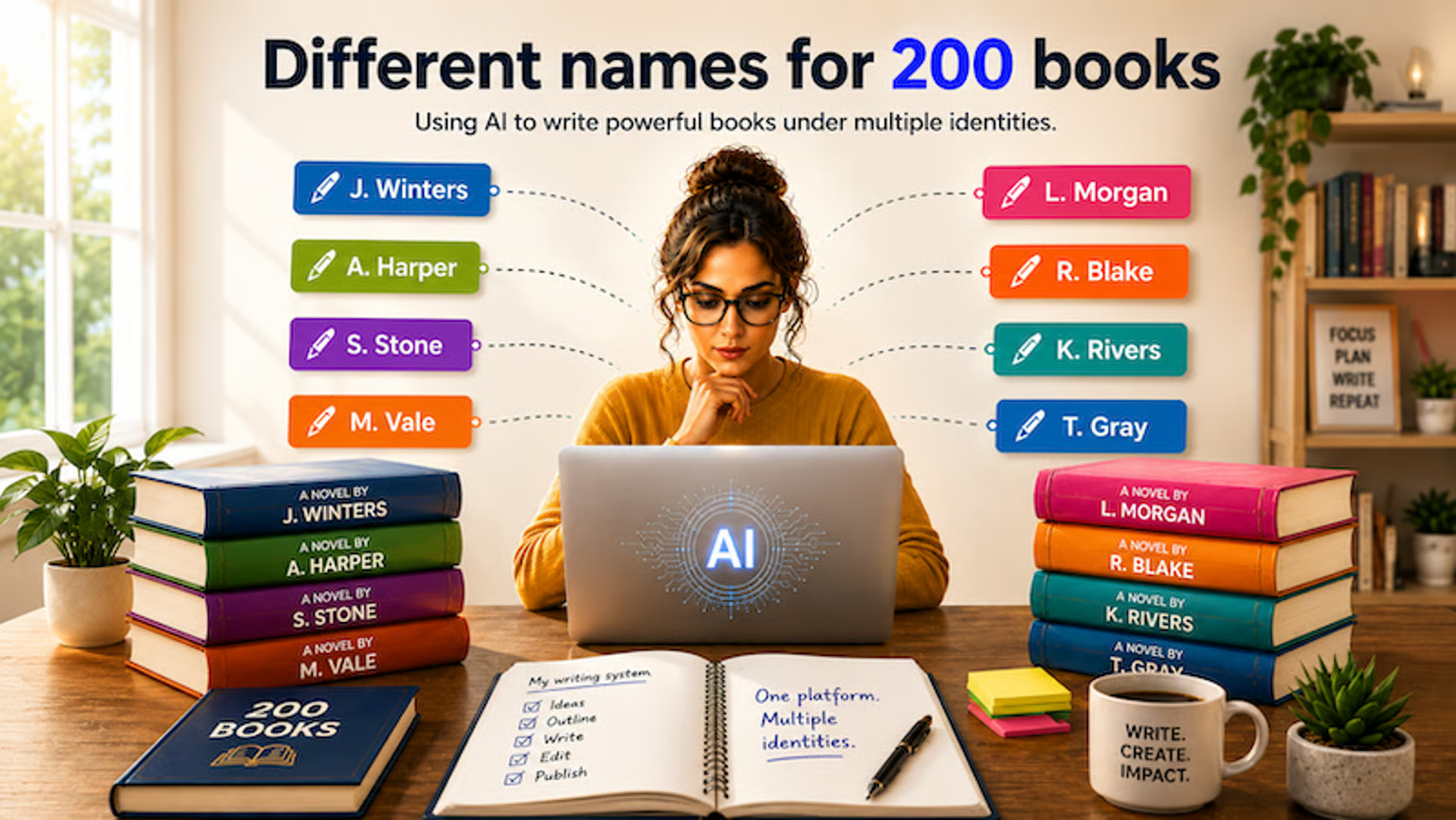
First we should discuss the story at hand, and it revolves around long time author ‘Coral Hart’ (a pseudonym). In the New York Times article, Hart openly proclaims her use of Anthropic’s Claude AI, under 21 different pen names, to write more than 200 romance books in the space of eight months. Hart collectively sold 50,000 copies, earning her up to six figures, and has even gone on to teach others how to create and monetise AI-assisted books through online courses.
To conclude Hart’s conversation with New York Times, she asks the question, with what one can only imagine was a very self-satisfied expression: “If I can generate a book in a day, and you need six months to write a book, who’s going to win the race?”
The internet, unsurprisingly, lost its mind. Hundreds of Reddit threads, Substack essays, and increasingly unhinged blog posts followed; all collectively trying to articulate why this felt so wrong, and why Hart seemed so unbothered about it. Some even called ‘jail time’ for Hart.
With shame sidelined, and a bit of boasting, Hart doesn’t just show us that the lines of ethicality are blurring in the literary world, but also that the systems meant to uphold them were perhaps always unsteady.
Hart isn't the villain. She's the symptom.
The truth is that Hart didn't break anything. She just walked through a door that was already wide open - because nobody thought to close it.
Still today there is little to no regulation governing AI authorship. No disclosure requirement, no governing body losing sleep over what it means for a book to be written by a machine and sold as though it weren't. Just two months ago 10,000 authors collaborated in the creation of Don’t Steal This Book, an empty book protesting the theft of books by AI companies to train AI models.
There's no kidding that the reality for most authors, even before AI came about, was already brutal. Advances were shrinking, attention spans were evaporating, and everyone was being told to build a "personal brand" instead of, you know, writing. Now authors are left competing with something that doesn't sleep, doesn't have rent, and can produce a novel between breakfast and lunch.
And the success of AI-generated romance absolutely doesn’t prove that machines can replicate human emotion. It might simply reveal that much of modern content consumption has become less about artistic expression and more about emotional convenience.
In that sense, AI isn't replacing art. It's becoming the literary equivalent of fast fashion.
But it’s important to remember, while AI-generated books dominate headlines, the books people obsess over most are still intensely human ones. And let’s be honest, readers aren't building midnight release queues for a chatbot's memoir and nobody's getting a tattoo inspired by a prompt.
What AI has exposed is a divide that perhaps always existed: the difference between books people consume and books people carry around with them for the rest of their lives.
So, to answer Hart's question “If I can generate a book in a day, and you need six months to write a book, who's going to win the race?”
Probably Hart.
But literature was never supposed to be a race. Nobody remembers who wrote the most books in 2025 - people remember the books that changed them. The books they underlined, lent to friends, dragged through three house moves and kept anyway.


